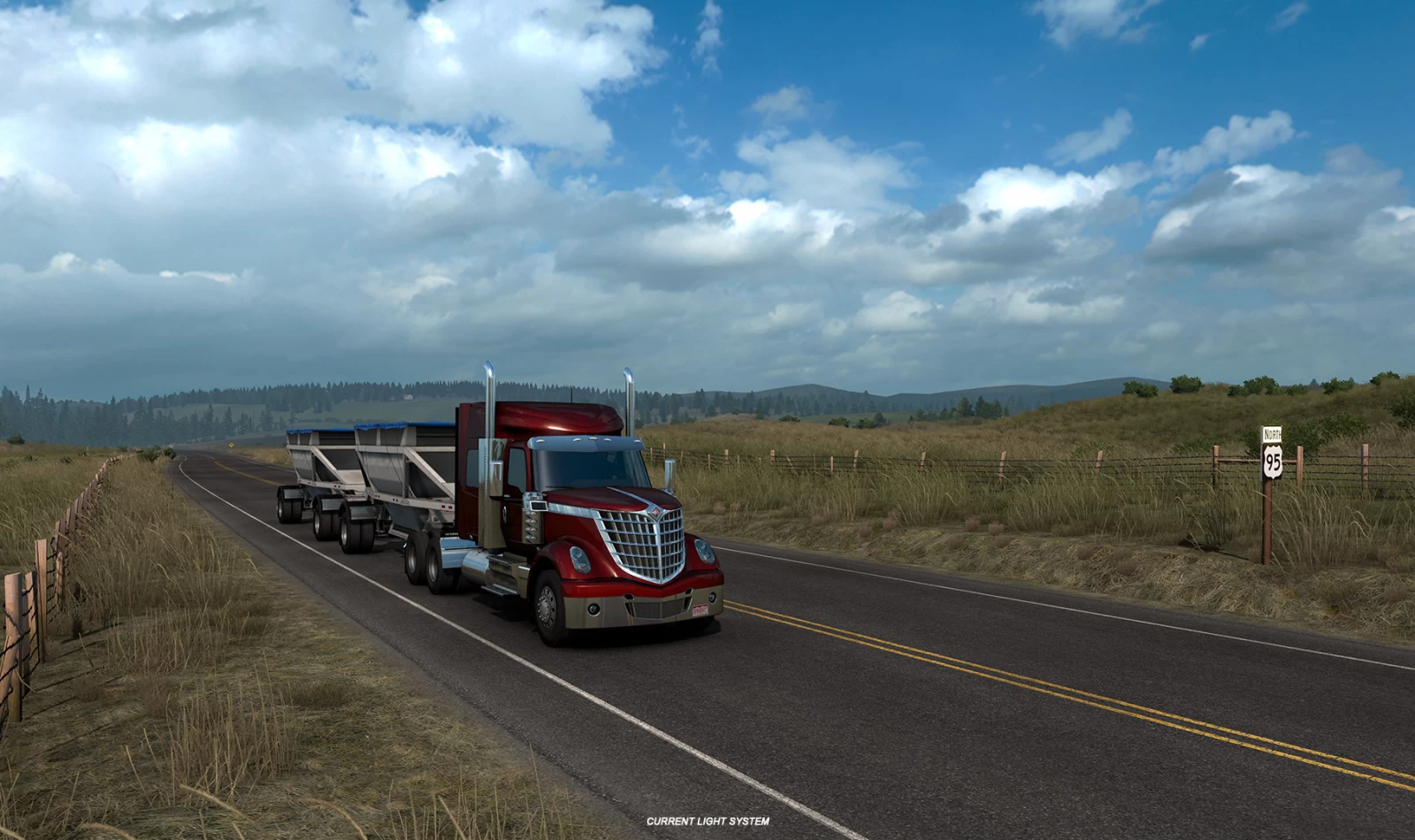
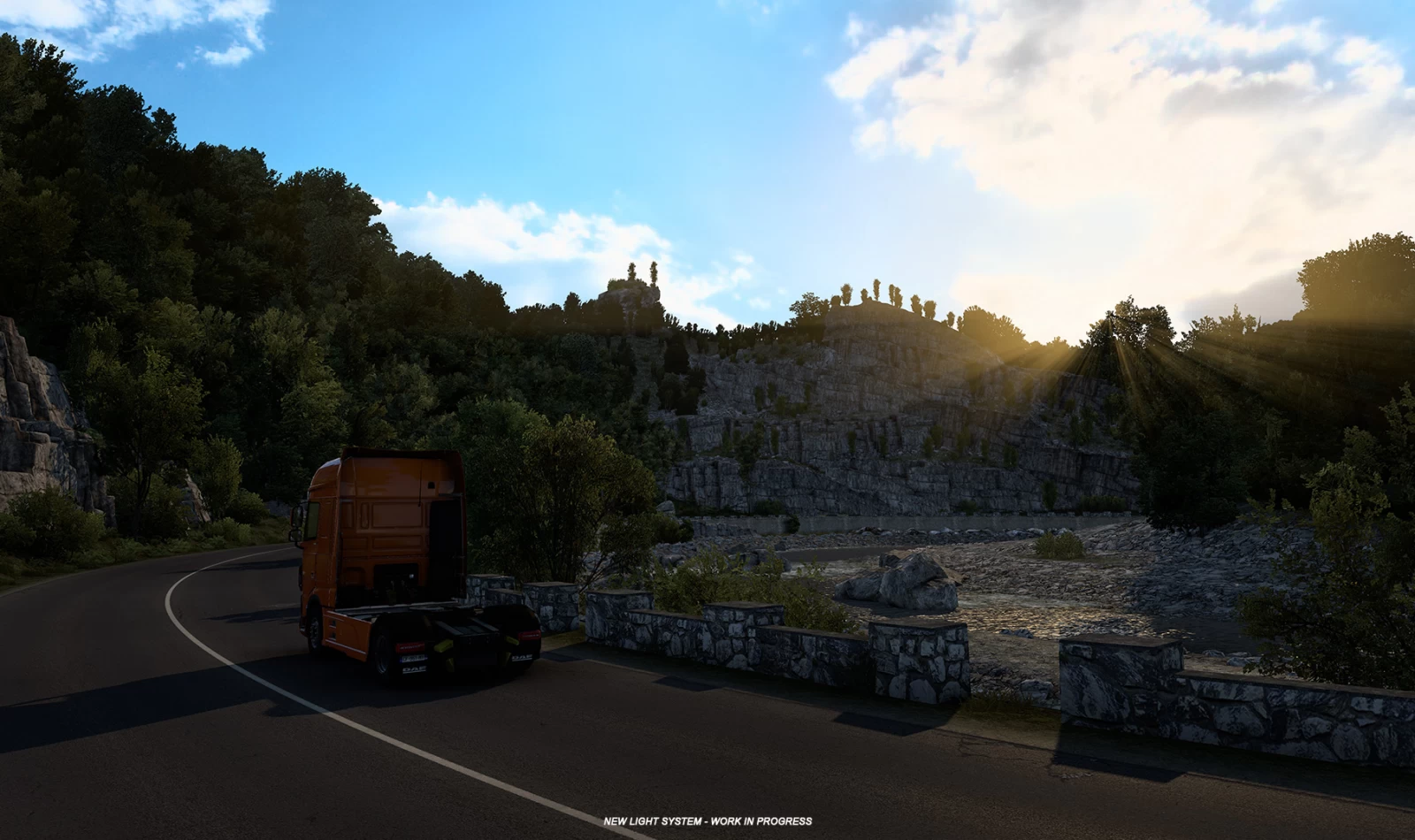
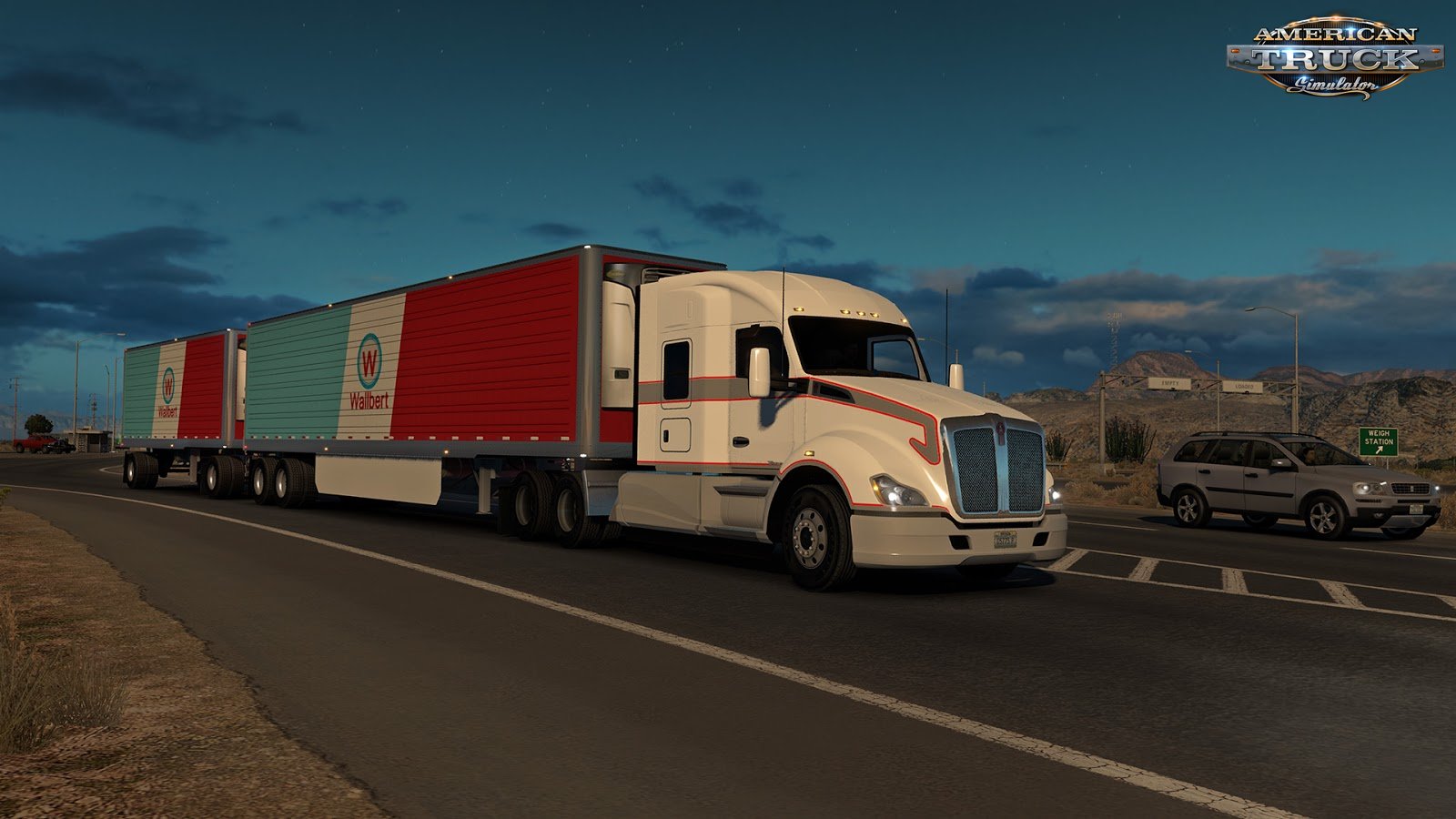
Great news from SCS Software presenting ,,New Lighting System" from the upcoming Update 1.40 for Euro Truck Simulator 2 and American Truck Simulator game.
The changes that we are introducing with the 1.40 update for both American Truck Simulator and Euro Truck Simulator 2 have been visible to the public for some time now, in the currently still ongoing Open Beta builds. By far the most visible change is the new lighting system, which has turned out to be the largest graphical rework for us in years. In today's blog post we would like to reveal more about what we have been through to make this change happen; let's take a look under the hood once again.

The major internal changes
- The scene is lit using real-life intensities (illumination: tens of thousands of lux for the daytime, tens of lux at night)
- To get light ratios into play - the rising sun overpowering street lamp lights and truck headlights, etc. This means we had to adjust all light sources and also readjust every emissive material in the game.
- We have a new display mapping function for better artistic control (exposure, contrast, toe, shoulder)
- We needed to get those real-life intensities onto the computer screen in a similar way as a camera's exposure works.
- Improved and more sensitive histogram for exposure selection
- This is due to the actual exposure being selected differently in every scene, and this varies also with differing light levels and the current weather type.
- Light source (street lamps, vehicle lights) changes.
- We have switched light sources to a more physical attenuation ('inverse square falloff').
- We are in the process of switching to a physical-unit-based configuration to reduce guesswork.
But also many smaller visual tweaks
- Relightable reflection
- Reflections in shop windows and smooth surfaces better matches the time of day and weather
- Improved reflection behavior
- On truck paint, shop windows, and glass in general
- Sun horizon shadow
- Visible when the sun rises or sets